
STORY AT-A-GLANCE
- Burns in dogs are deceptive injuries — what looks like minor redness in the first few minutes can reveal itself as a much deeper wound a day or two later
- The four main types — thermal, chemical, electrical, and mechanical — each call for slightly different responses
- Burn severity depends on both depth and surface area, since widespread shallow burns can cause major fluid and protein loss and lead to systemic illness even when the wound looks less dramatic
- Emergency first aid means cool water (not cold or icy) for 15 to 20 minutes, a loose nonstick covering, warmth for transport, and a fast call to the veterinarian
- Even small-looking burns deserve a vet's eye, since the depth of injury may not be visible right away
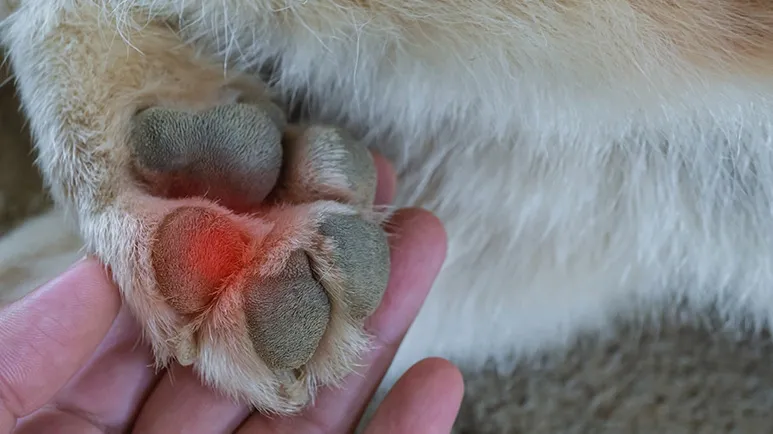
Your dog leans against the wood stove for half a second. Your puppy nibbles a phone charger cord. A cup of hot coffee tips off the coffee table and lands on a curious nose. Whatever the scene, the panic hits fast — and what your dog's skin looks like in the first few seconds does not always tell the whole story.
Burns are deceptive injuries. The visible damage can be subtle at first, even when deeper layers of skin and tissue are seriously hurt. That is why even a small-looking burn deserves a careful look, and often a phone call to your veterinarian.
Why Burns Are So Easy to Underestimate
With most cuts and scrapes, what you see is more or less what you get. Burns do not play by the same rules. The skin's full response to a burn can take hours — sometimes days — to show up. Surface redness may not look alarming, but the tissue underneath can already be damaged.
That delayed reveal is especially true of thermal burns, where heat continues to penetrate even after the source is gone. By the time blisters form or the skin starts to darken, the burn has been quietly worsening below the surface. The early window for limiting damage is short.1,2
The 4 Main Types of Burns in Dogs
Most burns in dogs fall into one of four categories, and the type matters because the right response is not always the same. Here is what sets them apart:3,4
- Thermal burns — They come from house fires, stoves, hot liquids, steam, hot pavement, sunburn, or radiant heat sources like wood stoves. These are by far the most common.
- Chemical burns — They are brought on by contact with bleach, drain cleaners, battery acid, paint thinners, gasoline, or other harsh substances.
- Electrical burns — Pets that chew on cords, become exposed to live wires, or when water becomes in contact with an electrical source. Mouth burns from cord-chewing puppies are a recognized type. Electrical burns can often lead to a dangerous build-up of fluid in the lungs, so the burns in the mouth are just the beginning.
- Mechanical or friction burns — These result from friction, like rope burns, carpet burns, pavement burns, or leash burns when a dog drags or is dragged across a surface.
Knowing which type you are dealing with helps the veterinarian choose the right treatment — and in the case of chemical burns, it can change the very first step you take at home.
Severity Depends on 2 Factors
Burns are classified by how deep they go and how much of the body they cover. A small, very deep burn and a wide, shallow burn can both be dangerous, just in different ways. Burns covering a large surface area can cause major fluid and protein loss, leading to systemic illness even when the burn is not especially deep.5 In veterinary medicine, burn depth is classified under three categories:6,7,8
- Superficial burns (first-degree) affect only the top layer of skin, the epidermis. You will see redness, swelling, fur loss, and tenderness. These typically heal in a few days with simple care.
- Partial-thickness burns (second-degree) reach into the dermis, the second layer of skin. They are painful, often blistered, and may ooze or weep. These take a few weeks to a few months to heal and carry a real risk of infection.
- Full-thickness burns (third-degree) destroy all layers of skin and the fatty tissue underneath. The area can look red, white, or charred and leathery black.
Because the nerve endings are destroyed, these burns can paradoxically feel less painful — which is one of the reasons they are easy to underestimate. Healing takes months, often requires surgical debridement or skin grafts, and leaves permanent scarring.
Emergency First Aid: What to Do (and What Not to Do)
If your dog has been burned, the first minutes count. Stay calm, and work through these steps in order:9,10
- Check the basics first — Make sure your dog is breathing and responsive, and call for emergency help if they are not. If you have been trained in pet CPR, this is where you use it.
- Cool the burn with cool (not cold) water — Run cool tap water over the area for about 15 to 20 minutes. This eases pain and helps stop heat from continuing to penetrate the deeper layers of skin. For a single burned body part, you can immerse it in cool water. Do not immerse a dog with widespread burns, as cooling too much skin too quickly can trigger shock.
- Cover the area gently — Place a clean, moist cloth or a sterile, non-adherent dressing loosely over the burn. The goal is to protect the wound from contamination, not to wrap or compress it.
- Keep your dog warm — especially with larger or deeper burns — A blanket draped over your dog during transport helps prevent hypothermia, which can sneak up quickly when significant skin is damaged.
- Use a muzzle if it is safe to do so — Even gentle, easygoing dogs can react unexpectedly when in pain. A makeshift muzzle from gauze or a soft leash can keep both of you safer on the way to the clinic.
Call your veterinarian or bring your pet to the emergency clinic immediately. Burns can worsen rapidly beneath the surface, and the sooner a professional sees the injury, the better the outcome. However, some old-school remedies actually make burns worse. Avoid the following:
- Do not apply butter, petroleum jelly, oil, or human ointments — they can trap heat, contaminate the wound, and some are toxic to dogs.
- Do not use ice or ice water — extreme cold can worsen tissue damage and cause hypothermia.
- Do not pop or drain blisters — intact skin over a blister is actually protective.
- Do not apply tight bandages. A loose, nonstick covering is what you want.
- Do not immediately flush a chemical burn with water without checking first. Some chemicals react badly with water — look up the substance or call animal poison control before pouring.
- Do not use peroxide, harsh soaps, or household disinfectants on a burn.
Does Every Burn Need a Vet?
Any burn that is deep, large, near the face or eyes, on the paw pads, or caused by a chemical or electrical source needs same-day veterinary care.
Even smaller, surface-level burns are worth a call to your veterinarian. As mentioned, what looks superficial in the first few minutes can reveal itself to be deeper a day or two later. A veterinarian can assess the depth of injury, prescribe appropriate pain control and antibiotics if needed, and give you specific instructions for at-home care.11
What Treatment Looks Like at the Clinic
Treatment depends on the type, depth, and extent of the burn. For mild burns, your veterinarian may simply clean the area, apply a topical treatment, and give you home-care instructions.
For more serious burns, treatment becomes more involved. IV fluids are often given to replace the fluids lost through damaged skin. Blood or plasma transfusions may be needed if protein loss is severe. Pain management is critical, since burns are notoriously painful — your veterinarian may use a combination of injectable and oral medications. Antibiotics are commonly prescribed for partial- and full-thickness burns to prevent infection.
Bandaging and topical treatments are tailored to the stage of healing, and bandages typically need to be changed daily under sterile conditions. For full-thickness burns, debridement and sometimes skin flaps or grafts may be needed to close the wound.
Dogs unable to stand may need help with positioning and nutritional support, since healing burns demand a lot of calories.12
Ongoing Care at Home
Once your dog is home, the work is not over. Your veterinarian will give you a specific care plan, but a few general principles apply:13,14,15
- Watch closely for signs of infection — Increasing redness, swelling, warmth, foul odor, or discharge are all reasons to call back. Keep an eye out for areas turning black or leathery, which can signal the formation of eschar (dead tissue) that may need to be removed.
- Keep your dog from licking, scratching, or chewing the area — A recovery cone or medical pet shirt can help. If bandages are part of the care plan, keep them clean and dry, and let your veterinarian handle the bandage changes when possible.
- Only use topical products your veterinarian specifically recommends — Some over-the-counter options that work well for humans can be harmful to dogs, and others may slow healing rather than help it.
Reducing the Risk in the First Place
You cannot bubble-wrap every household risk, but a few habits can lower the odds of a burn happening in the first place. Take note of these safety reminders:
- Use stove guards, fireplace screens, and baby gates to keep dogs at a safe distance from heat sources
- Keep the kitchen a pet-free zone while cooking, especially with hot oil or boiling water
- Run the hose for a minute before letting your dog drink — sun-warmed water inside the hose can reach scalding temperatures
- Puppy-proof electrical cords and outlets — chewing on cords can cause mouth and palate burns, and lead to life-threatening pulmonary edema
- Store bleach, drain cleaners, and other harsh chemicals well out of reach
- Use dog-safe sunscreen on light-coated or thinly furred breeds
- Watch hot pavement in summer — if the back of your hand cannot rest on the ground for seven seconds, it is too hot for paws
The Bottom Line
Dog burns can look minor in the moment and turn out to be much more serious as the hours unfold. Stay calm, cool the area gently, cover it loosely, skip the kitchen-cabinet remedies, and call your veterinarian — even for burns that seem small.
Most dogs recover beautifully from minor burns with prompt, calm care. The deeper or more widespread ones demand veterinary expertise and patience. Either way, your fast response and a clear-headed plan are what tilt the odds toward a smooth recovery and skin that heals as well as it can.
Sources and References
- 1,3,7,12,14 VCA Animal Hospitals, Burns in Dogs
- 2,4,8,10,11,15 American Kennel Club, October 7, 2025
- 5 DVM360, August 1, 2008
- 6,9,13 American Red Cross, Burns in Dogs